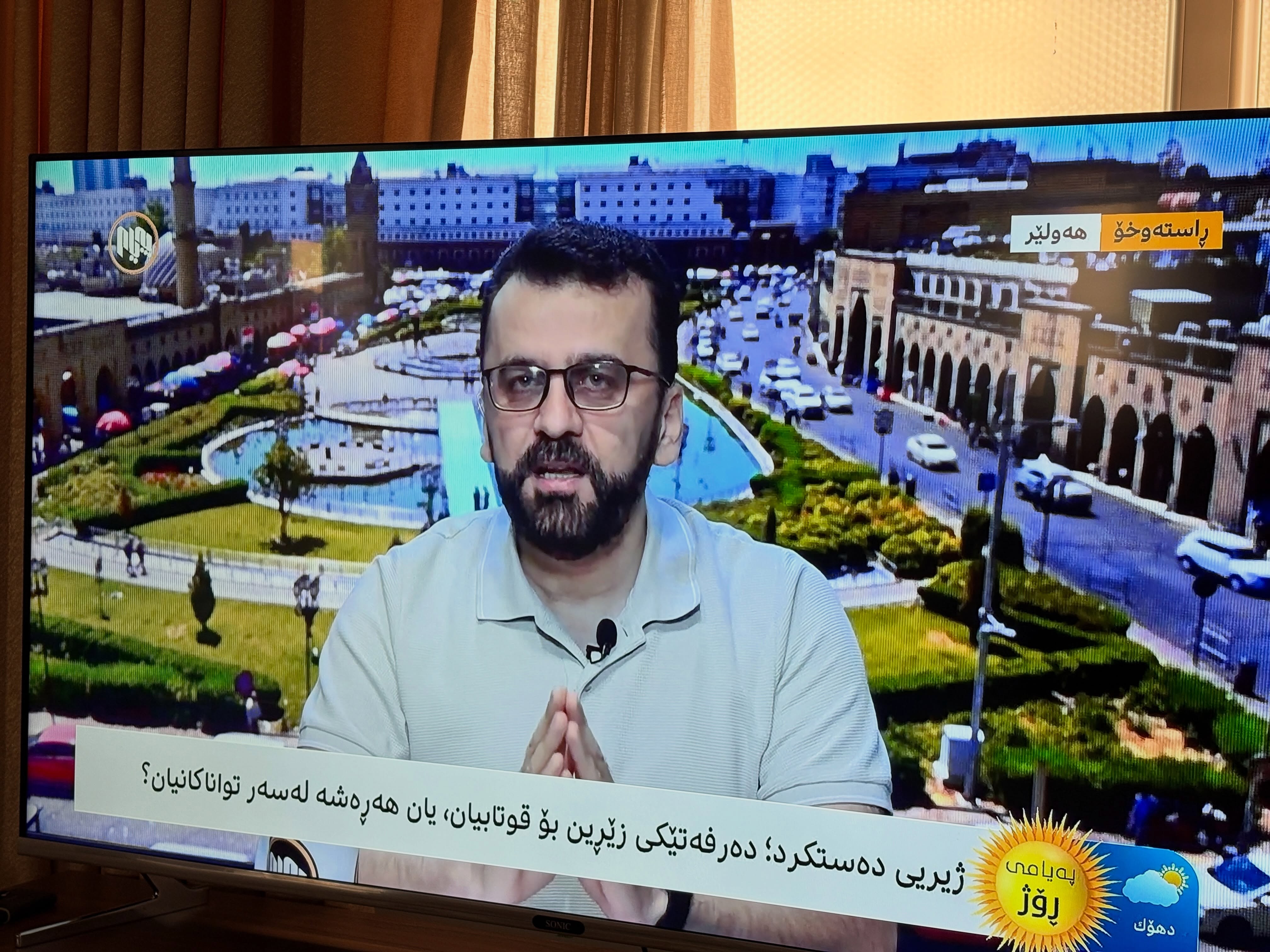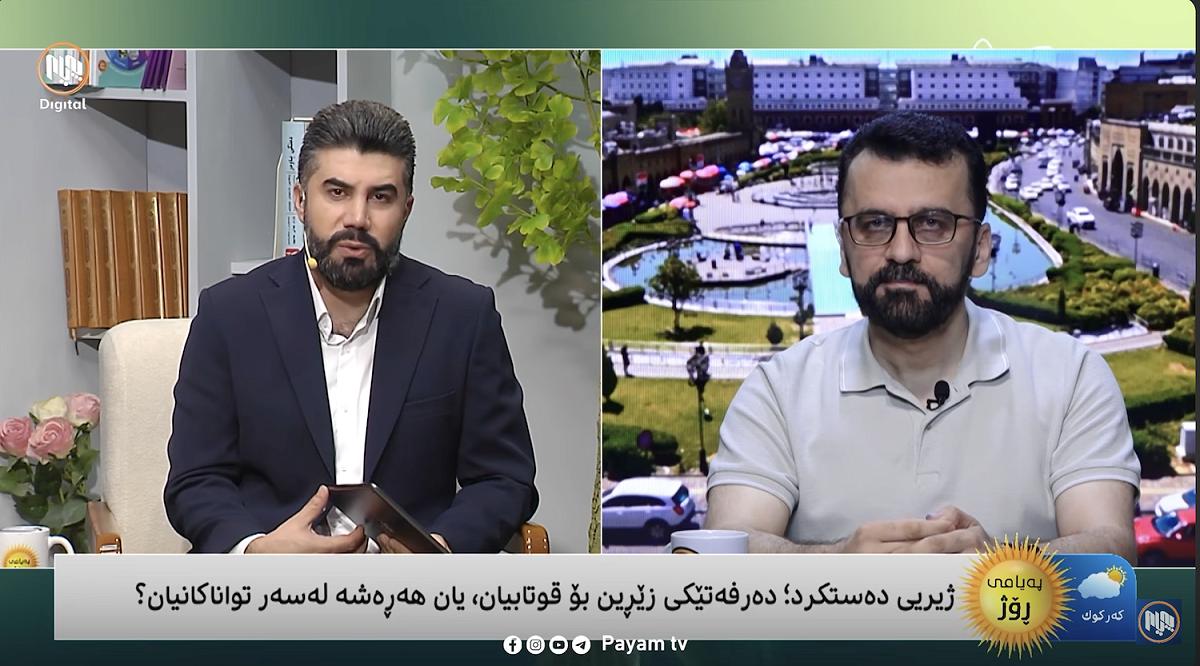
Published: October 6, 2026
Program: Payami Rozh (پەیامی ڕۆژ) — Payam TV
Guest: Dr. Hemin Fatih Ibrahim (Dr. Hemin Ibrahim), PhD in Artificial Intelligence & Head of the AI Department at Tishk International University (TIU), Erbil
Watch Full Interview: YouTube — Payam TV Interview
https://www.youtube.com/watch?v=Y4ZOWm6qX1Y
On October 6, 2026, Dr. Hemin Fatih Ibrahim, Head of the Artificial Intelligence Department at Tishk International University (TIU) in Erbil, Kurdistan Region of Iraq, joined Payam TV’s Payami Rozh live to examine one of the most urgent questions facing modern education: Is Artificial Intelligence a golden opportunity for students, or a threat to their cognitive abilities?
Drawing on his academic leadership, AI research, and experience developing educational technology in Kurdistan, Dr. Hemin Ibrahim argued that AI is both an unprecedented educational accelerator and a serious risk, depending entirely on how students, educators, and institutions adapt.
1. The Accelerating Pace of AI Development
Unlike earlier technological waves where society waited years between major releases, Artificial Intelligence now advances on a daily basis amid intense competition among global tech companies [00:47]. Whereas AI capabilities previously doubled or tripled roughly every seven months, major leaps now occur faster than monthly [01:17]. Dr. Hemin Ibrahim emphasized that these breakthroughs can serve individuals, society, and scientific progress—provided they are used responsibly [01:35].
2. AI as a 24/7 Personal Tutor for Students in Kurdistan
Addressing the central question, Dr. Ibrahim noted that AI offers extraordinary opportunities for learners [01:53]:
- Equalizing access to world-class tutoring: AI functions as a patient, always-available personal tutor. A student in Sulaymaniyah or Khanaqin who genuinely wants to learn can access explanations comparable to those of a top teacher in California [02:19].
- Grade-level customization: When a student struggles with a teacher's slides, a 9th-grade concept, or a 12th-grade (Poli 12) chapter, they can specify their exact grade level and receive clear, tailored explanations and examples [03:01].
- Human verification: Although AI models still make mistakes, students can verify and correct them while benefiting from the tool's unmatched patience [02:41].
- The evolving role of teachers: Educators no longer hold a monopoly on information transfer, as students can retrieve facts faster and more effectively through AI [03:22].
3. Free vs. Paid AI Models: Understanding the Quality Gap
Based on hands-on testing, Dr. Hemin Ibrahim highlighted a substantial gap between free and paid AI systems [04:02]. Using an accessible analogy, he compared a free model to a mind trained for one month, constrained in depth, reasoning, and usage limits [04:24], while a paid model resembles a mind trained for six months, delivering deeper analysis and stronger capabilities [04:44].
- Practical Tip for Students: To make advanced tools affordable, Dr. Ibrahim encouraged students to split a $20/month subscription among four classmates ($5 each) to access higher-quality models and learning features [05:00].
4. Academic Misuse, Hallucinations, and Career Risks
Dr. Ibrahim warned against a growing global trend, also visible across Kurdistan, of students acting as "copy-paste couriers," pasting assignments into AI and submitting the output without understanding it [05:30].
- AI Hallucinations: Many students assume AI outputs are always accurate. Dr. Ibrahim cited university student reports filled with polished, authoritative-looking citations where every single reference turned out to be completely fabricated [05:50].
- Long-term career danger: Prioritizing submission over genuine learning backfires after graduation [06:29]. Relying on ChatGPT to pass exams will not secure a job, because any other candidate can use the same tool [06:39].
5. Age Guidelines, Curriculum Alignment, and Prompt Engineering
Dr. Hemin Ibrahim outlined clear, age-appropriate boundaries for AI adoption in schools:
- Elementary School (Up to 6th Grade): Direct use of AI chatbots for schoolwork should be avoided. Sharing a personal example, Dr. Ibrahim noted he did not allow his own child to use AI to write a Kurdish essay, insisting they develop independent writing skills first [07:36]. Early familiarity with technology is positive, but chatbot reliance is harmful.
- Middle School: Limited use is acceptable under active parent and teacher supervision [08:07].
- High School (Especially 12th Grade) & University: AI becomes an essential private tutor when used with proper methods [08:15].
To get accurate results, students must master Prompt Engineering—a discipline so critical that IT students at Dr. Ibrahim’s university study it over a dedicated four-month course [08:58]. His key recommendations include:
- Curriculum Alignment: Generic biology questions (such as explaining the heart muscle) often return international-standard answers that diverge from Kurdistan’s 12th-grade curriculum [08:36]. Students should upload their exact textbook and instruct the AI to stay strictly within it [09:14].
- Role-Playing & Context: Prompts must vary by subject and goal [10:00]. Assigning a precise persona, such as "Act as a biology teacher with 20 years of experience in Kurdistan", along with the student's grade level and city dramatically improves output quality [10:25], as even a single misplaced word can steer an answer off course [10:46].
- Guided Learning Modes: Dr. Ibrahim recommended tools like Guided Learning in Gemini, which walks students through concepts step by step rather than simply handing out final answers [09:33].
6. Personalized Learning at Scale
A single teacher cannot simultaneously adapt to 30+ different learning styles and paces in a classroom, whereas AI can build 30 individualized learning paths [12:26].
- Multi-format explanations: AI can teach via visuals, stories, animations, music, videos, interactive math and graphing tools (such as in Gemini), or even poetry and rhymes inspired by classic storytelling like Rostam and Zal [11:12].
- Accelerating fast learners: Forward-thinking schools already leverage AI to help advanced students move ahead, completing two grades in one year or advancing in subjects like mathematics without being slowed down by repetitive drills [12:49].
- Diagnosing learning styles: Citing AI pioneer Geoffrey Hinton, Dr. Ibrahim noted that education stands among AI’s proudest achievements because it can both diversify instruction and diagnose which learning method works best for each individual [13:13].
7. Reforming Teaching Methods and Assessments
Rather than blaming students for taking shortcuts, Dr. Hemin Ibrahim stressed that teachers and educational institutions bear the responsibility to modernize [14:16].
- Rethinking traditional homework: Standard take-home essays are largely obsolete [14:44]. When take-home work is assigned, students should defend and explain their work orally in class to demonstrate authentic comprehension [15:06].
- Shifting the educational goal: Since AI can draft essays effortlessly, the objective is no longer the text itself, but the student's mastery and defense of the ideas within it [15:50]. Teachers who continue operating with pre-2022 methods risk being left behind [16:03].
- The Gym Analogy: Just as a trainer's workout sheet builds no muscle unless you lift the weights yourself, the human brain requires active mental effort [16:38]. Over-reliance on AI risks producing socially isolated graduates who struggle to think critically, make decisions, or hold meaningful conversations [17:08].
8. Data Privacy and Cybersecurity Warnings
Concluding the interview, Dr. Hemin Ibrahim issued a direct warning about AI data privacy [17:40]:
- Free tiers train on your data: Inputs shared with free AI tools are routinely stored and used to train future models [18:15]. Uploading medical lab results or sensitive personal and family matters carries a real risk of exposure [18:40].
- Paid plans are not risk-free: Even paid plans that opt out of model training typically retain data for around 30 days, creating a window for breaches. Consequently, many organizations deploy private, offline AI systems [19:21].
- Pattern recognition: Avoiding your real name or primary email does not guarantee anonymity; AI systems excel at correlating behavioral patterns and queries with social media profiles [19:47].
- The Golden Rule: Never upload personal photos, faces, or private information to an AI platform that you would not be comfortable having others see [20:12].
Frequently Asked Questions (FAQ)
Should elementary school students use AI chatbots for homework?
According to Dr. Hemin Fatih Ibrahim, elementary students (up to 6th grade) should not use AI chatbots directly to complete assignments, as they need to build foundational reading, writing, and critical-thinking skills independently.
How can 12th-grade (Poli 12) students in Kurdistan use AI effectively?
Dr. Hemin Ibrahim advises 12th-grade students to upload their official Kurdistan Region curriculum textbooks into AI tools, specify their grade level and local context in their prompts, and use interactive learning modes like Gemini’s Guided Learning rather than asking for direct answers.
Is it safe to upload personal photos or medical records to free AI tools?
No. Dr. Hemin Ibrahim warns that free AI platforms generally retain and train on user inputs, and even paid tools often store data temporarily. Users should never share personal photos, faces, or confidential information with public AI systems.
About Dr. Hemin Fatih IbrahimDr. Hemin Ibrahim holds a PhD in Artificial Intelligence (University of Malaya), an MSc in Advanced Software Engineering (University of Sheffield), and BSc degrees in IT (UKH) and Mathematics (Salahaddin University). He currently serves as the Head of the Artificial Intelligence Department at Tishk International University (TIU) in Erbil, Kurdistan Region of Iraq. An AI researcher, full-stack & iOS developer (creator of Poli 12 and C4kurd), and digital literacy advocate, Dr. Ibrahim regularly advises institutions, journalists, and students on AI, technology, and cybersecurity across Kurdistan.
Gallery